Kylie Minogue brought out Aussie stars as she sang her hits at the AFL Grand Final
· Brisbane Times
· Brisbane Times
· Business Insider
Courtesy of Kathie Schwartz.
This as-told-to essay is based on a conversation with Kathie Schwartz, 72, who built a tiny home in her California backyard. The conversation has been edited for length and clarity.
Visit somethingsdifferent.biz for more information.
I wanted to get ahead of planning for old age. My husband and I are in our 70s and in very good health, but we've been losing friends and going to a lot of celebrations of life. At our age, that's pretty common.
After one celebration of life, my husband looked at me and said, "Promise me you'll never put me in a home." That was kind of my jumping-off point: What were our options?
I started thinking about whether our home was still right for us and whether we were living in the right place. I had gone through it with my parents and watched friends go through it, too.
At the time, we were living in a three-story, 3,600-square-foot home in Truckee, California, near Lake Tahoe. In the winter, we could get 22 feet of snow in our yard. There was one year we didn't see our front door for three months. At a certain age, there's a limit to how long you can live in that kind of snow.
We decided it was best to downsize and move, especially as many of our friends were leaving the area.
At first, we considered living in a retirement community. We visited places all over — Nevada, Central California, and other areas where older people go for low taxes and to have a resort-style lifestyle.
I'll tell you, while these places have everything you could need, there's just something weird about them.
One of the places we tried out was a beautiful development in Arizona. It was in the middle of nowhere. You drive through nothing, and then all of a sudden, the gates open, and there are waterfalls, palm trees, stadium pickleball courts, mahjong rooms, and golf courses.
They had beautiful model homes lined up on a block. You could pick everything, from the furnishings to the lot you wanted, and they would just plop the whole thing down for you.
We stayed there for two or three days. As we were leaving, the gate opened, and beyond it was just the desert. My husband stopped the car at the gate, looked at me, and said, "There is no way I'm ever living here." I said, "I hear you." That crossed it off the list.
We eventually decided to move into a home we owned in Petaluma, California. It's a single-story, 1,100-square-foot house built in 1924. We'd bought it 35 years earlier and had always used it as a rental property.
It was quite a shock to go from our 3,600-square-foot Truckee home to 1,100 square feet. But this little home is worth well over $1 million. If we wanted a place with extra bedrooms or guest rooms, we'd be looking at close to $2 million just to get something comparable to our old home.
The house has a backyard, but it wasn't much of one. For a while, I kept thinking, "Okay, what would I put back there? How could we use it?"
Around that time, a friend of mine who lives with her mother bought a large piece of property. Her mother still wanted to maintain her independence, so she built her a tiny home in the backyard.
While my friend was researching and planning the construction, we talked about it all the time. It inspired me to build one of our own, though it took a while to convince my husband.
We decided to build with Colorado-based Studio Home. For about a year, I played around on their website, designing what I envisioned. Eventually, we hired a landscape architect and decided to build a 480-square-foot unit, the largest we could on the property.
The permitting process took about a year before we could begin construction. And then, of course, there were so many decisions to make: what kind of windows we wanted, what finishes to use — it was a lot.
The Schwartz tiny home was built by Colorado-based Studio Home.Courtesy of Kathie Schwartz
Once construction started, though, it went pretty quickly. The foundation took the longest, along with trenching for the sewer and electrical lines.
We completed building in 2022. The home has a kitchen and a bathroom, and instead of building a separate bedroom, I put in a Murphy bed. In all, the project cost about $280,000.
Adding this tiny home to our property was truly one of the best real-estate decisions I've ever made. Not only did it increase the value of our property, but it has also given us so much flexibility.
We use our tiny home for many things. First, it serves as a guest house when people come through town, since our main house is too small to comfortably host guests. Living in Petaluma is expensive, so building the tiny home was a more practical option than trying to find a larger house.
Second, I teach mahjong, so I host classes there. And third, our longer-term goal is that, if I eventually need to hire someone to help care for us — as we don't have children — they could live in the tiny home. That way, we wouldn't have to move to a retirement community, which can be very expensive.
The Murphy bed and kitchen.Courtesy of Kathie Schwartz
The goal is always to stay in our home as long as possible. By building this tiny house, we have so many more options depending on my health. It's given us so much freedom.
I have this conversation with my friends all the time. We don't have to go the route our parents went, right? We're a different generation; we don't need to end up in a retirement home.
We've decided to band together and plan for our futures. We've talked about buying a larger piece of property and putting a bunch of tiny homes on it so we can live together as a community.
As you get older, you want to live somewhere you're comfortable and be around the people you care about. Sometimes the people you consider family aren't necessarily your birth family — your friends become your community and support system.
Read the original article on Business Insider· Fortune
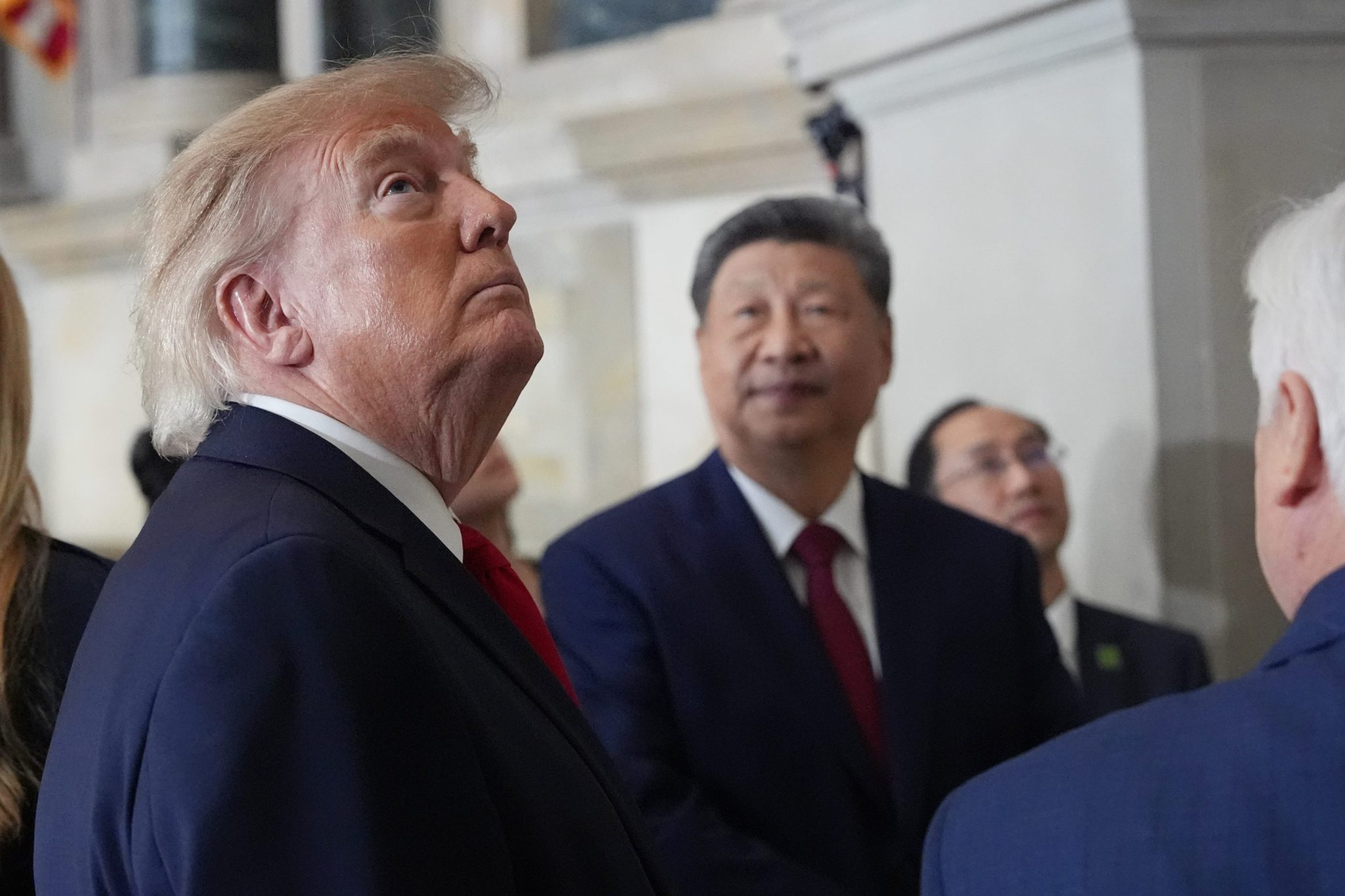
China and the U.S. agreed to set up a channel for handling AI-related incidents and accelerate work on military crisis communications following a three-day summit between their leaders in Washington, both sides said in statements Saturday.
Visit sportfeeds.autos for more information.
The two sides agreed to keep working together on a Board of Trade on selected bilateral trade issues, with the White House saying in a statement Saturday that the board went into operation this week.
The summit produced no major breakthroughs, but some experts say the steps toward greater cooperation were still considered important, allowing the two powers to set up working groups that could prevent problems from escalating.
Chinese President Xi Jinping landed back in Beijing on Saturday, according to Xinhua. During the visit, President Donald Trump was remarkably warm to Xi, despite having escalated a trade war with China the previous year that had global repercussions.
The two sides agreed to sign a memorandum of understanding on strengthening crisis communications and preventing crises between the two militaries, China’s Foreign Ministry said Saturday in its readout. The one-page statement from the Chinese side was light on details.
Both sides will set up a communication mechanism for artificial intelligence -related incidents, to discuss related risks and benefits, with an AI-specific dialogue scheduled for November.
The statement said both sides will continue to work together on the pledge to reduce reciprocal tariffs on roughly $30 billion worth of goods. During the summit, the two leaders agreed to extend a trade truce by two months. The White House statement said China agreed to import at least 10 million metric tons of coal from the U.S. in 2027 and 2028.
Most of the reduction in tariffs is aimed at non-sensitive goods, such as agricultural products or holiday decorations.
The statement from the White House also said the two sides continued to work on American concerns about rare earths supply, “with the goal of ensuring shipment levels return to appropriate levels.” China put export controls on rare earths last year in response to the U.S. tariffs, cutting the supply sent to the U.S. and other countries.
Both sides agreed to meet at the Asia-Pacific Economic Cooperation summit in Shenzhen, China, in November, and then later at the G20 at the Trump National Doral Miami golf club in Florida.
Both also said that Iran should honor its stated commitment to not develop nuclear weapons, and that no country should charge a toll on international waterways, in a reference to the Strait of Hormuz, which has seen significantly reduced traffic since the U.S. war with Iran began.
The U.S. statement also said it welcomed China’s move to add export controls for an additional two precursor chemicals for fentanyl, and both noted that law enforcement had been able to make arrests in fentanyl-related cases recently.
Although the visit produced no major breakthroughs on the countries’ fundamental differences, analysts said the incremental steps were noteworthy.
“Personal diplomacy between the two leaders is important, but the emphasis on working-level engagement, military-to-military dialogue and crisis-management mechanisms suggests an effort to make that stability more durable and institutionalized,” said Wang Zichen, deputy secretary-general of the Beijing-based think tank Center for China and Globalization.
This story was originally featured on Fortune.com